
How locals actually find you
The small, ordinary moments where a neighbour decides to walk in — and the handful of things that put you in front of them.
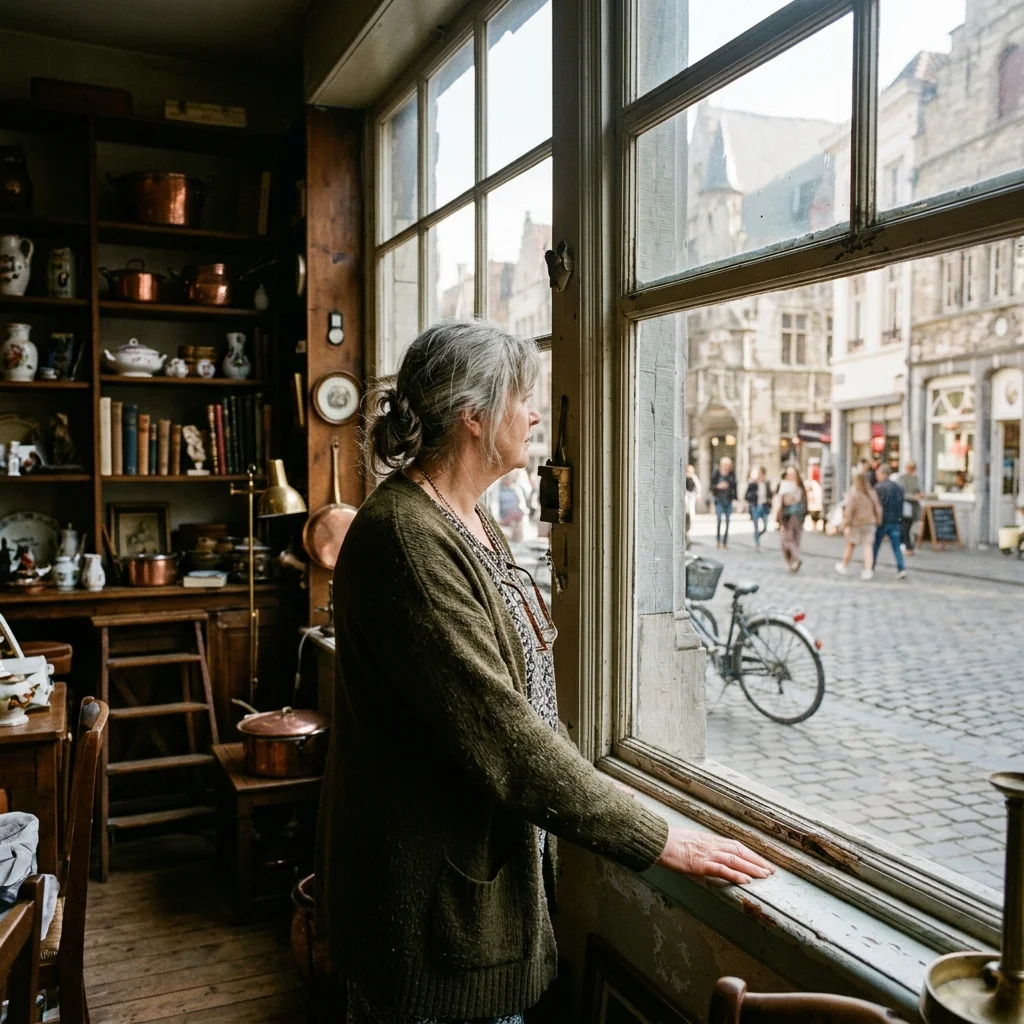
Think about how you found the last new place you tried — the café you finally walked into, the shop you'd passed for weeks before stepping inside. You probably didn't see an advert. Something quieter pointed you there: a quick search, a word from a friend, a familiar face drifting past in your feed. That's illustrative, not a study — but it's worth sitting with, because for a small business on a European high street, that moment of being found is the whole game.
There's no single trick to it. There are a few well-worn roads to your door, and each one asks something slightly different of you. Here's how being found tends to happen, and what you can actually do about each route — without hiring an agency or spending your evenings on it.
The three roads to your door
Almost every new customer arrives down one of three paths. Knowing which one you're looking at tells you where to put your limited time.
Someone types "coffee near me" and picks what's close, open and convincing.
A friend, a neighbour or a local chat group mentions your name.
Your post drifts past someone who lives nearby and lodges in their memory.
The map wants accurate, current details. The recommendation wants a profile worth landing on. The feed wants a reason to keep turning up. Treat them as three different jobs and each one gets simpler.
Your map listing is your storefront
When someone searches the map, your listing is the window they press their face against before deciding whether to walk over. It does the deciding for them, often before they've read a single word you've written elsewhere. So it's worth keeping the glass clean.
Fill it in yourself, honestly: opening hours that match the door, a clear photo of your entrance so people recognise it from the pavement, a phone number that actually rings, and a short reply to the reviews customers leave. None of this is glamorous, and none of it can be faked into looking better than it is. Give it a calm half-hour of housekeeping once a month — hours shift with the seasons, your frontage changes, a phone number moves — and the listing stays trustworthy on its own.
A straight answer: SmashOne doesn't touch your map listing — that window stays in your hands. What SmashOne sits behind is everything that happens after someone taps through to your social profiles.
Recommendations come from being findable
A recommendation rarely ends with the recommendation. "You should try this place" is followed, within seconds, by a tap into Instagram or Facebook to see for themselves. What they find there quietly settles the matter.
A profile that posted this week, answers the odd question and shows what's on the shelves today reads as a place that's open and cared for. A profile whose last post is from last spring plants a small doubt — are they even still here? You don't get to explain the gap; the silence speaks first. Being recommended only works if the recommended-to person finds something alive at the other end.
Scheduling is what keeps a profile from going quiet. SmashOne publishes up to 5 scheduled posts a day on each channel — Facebook, Instagram and Telegram — so there's always something recent to land on. And a catalogue with prices answers "how much?" before anyone has to ask the question.
Answer fast, win the walk-in
The most valuable message a local business gets is short and a little urgent. "Do you have this in stock?" "Are you open now?" The person asking is often standing a few streets away, deciding in real time whether to come to you or keep walking.
Answer within minutes and you usually get the walk-in. Leave it until the evening and they've already found someone else who replied while it still mattered. The trouble is that these messages never arrive at a convenient time — they come during the lunch rush, mid-haircut, halfway up a ladder.

Your AI employee answers those messages from your catalogue and your FAQ, around the clock — up to 1,000 replies a month in total. Every reply carries a notice that it came from the assistant, and anything it can't answer with confidence is handed straight to you.
A weekly local rhythm
You don't need a content strategy. You need a rhythm a busy owner can actually keep when the week gets away from them. Three posts does it:
One that says what's in today — the loaf that just came out, the table that opened up, what's fresh on the shelf.
One from behind the counter — a little of the work people don't usually see. It's the part that makes you a person, not a pin on a map.
One that answers the tired question — the thing you're asked every single day. Post it once and you'll be asked it a little less.
The point isn't the three posts. It's that you set it up once and then let it publish itself, every day, while you get on with the actual job. A steady, unremarkable rhythm beats a brilliant burst followed by three months of silence — every time.

Be the answer when locals look
We open 1 September. AI employees from €49/month per role.